

Introduction
The algorithmic trading landscape has never been more treacherous—nor more tantalizing. Every week, a fresh wave of Expert Advisors floods the MetaTrader 4 marketplace, each promising to transform a modest deposit into a generational fortune with the casual indifference of a vending machine dispensing candy. The intermediate trader, that battle-scarred survivor of blown demo accounts and midnight backtesting sessions, has learned to treat such proclamations with the skepticism typically reserved for cryptocurrency influencers and miracle diet pills. Yet, amid this cacophony of mediocrity, a specific piece of code has begun to generate an almost uncomfortable level of attention. Whispers in trading forums, cryptic Telegram signals, and a sudden spike in search queries all point toward one entity: the Tree Of Life EA V4.14 MT4.
The name itself is an audacious choice, invoking imagery of ancient wisdom, organic growth, and perhaps a dash of mythological hubris. But strip away the branding, and what remains is a rules-based trading system engineered for the MetaTrader 4 platform, reportedly refined across fourteen major iterations. For the intermediate trader who has already mastered the difference between a false breakout and a genuine trend reversal, the pressing question is not whether this EA is "magic"—it is whether the underlying logic constitutes a statistically viable edge. The commercial investigation begins not with grand promises, but with a dispassionate dissection of mechanics, risk parameters, and the all-important historical performance data. This analysis will navigate the murky waters where legitimate quantitative strategy collides with aggressive marketing, equipping the reader with the forensic framework necessary to judge the Tree Of Life EA on its technical merits rather than its poetic moniker.
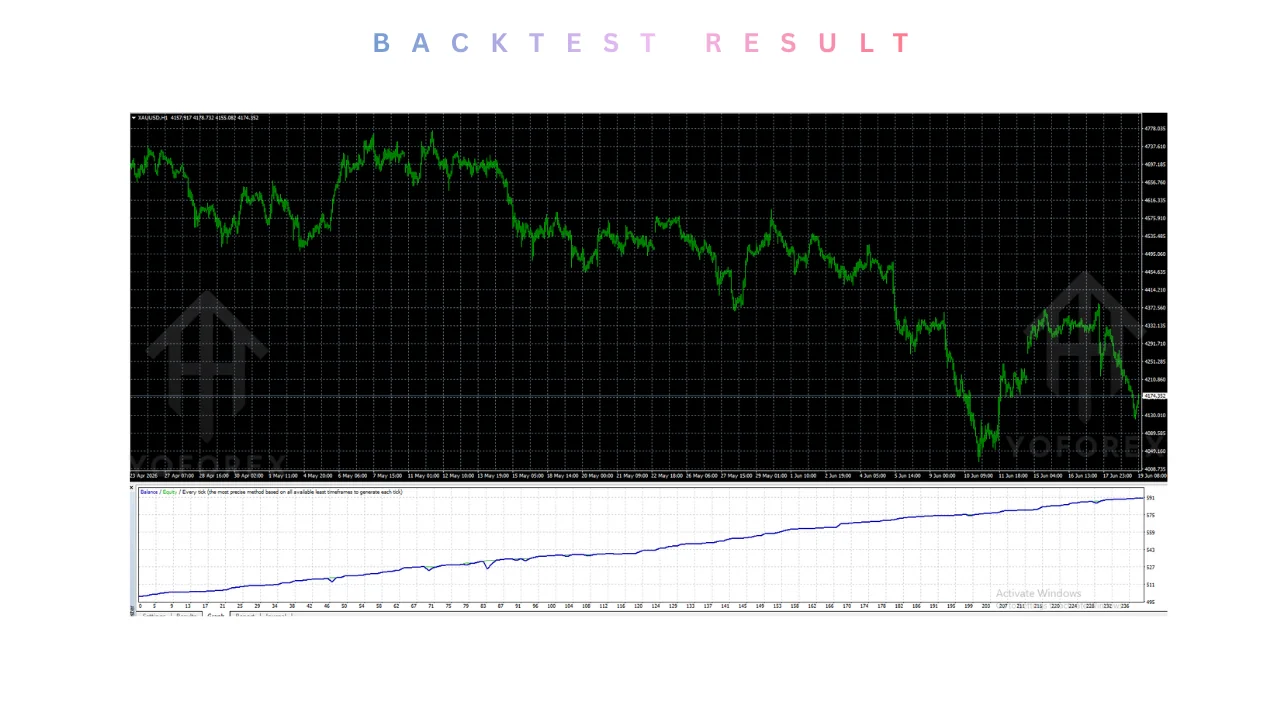
The Architecture of Organic Grid Logic
Beneath the surface of any legitimate Expert Advisor lies its algorithm's skeletal structure, and the Tree Of Life EA V4.14 MT4 employs what its documentation cryptically refers to as an "adaptive correlation grid." This terminology is not mere jargon for jargon's sake, though it certainly flirts with that boundary. In practical terms, the system monitors correlated pairs—most notably EURUSD and USDCAD—on the M5 timeframe, constructing a dynamic basket of positions that expands or contracts based on real-time volatility metrics. Unlike the infamous "martingale" systems that double down on losing positions with suicidal abandon, the Tree Of Life purports to use a probability-weighted scaling model. This means position sizing is not a simple geometric progression but rather a function of statistical deviation from mean reversion thresholds.
The genius—or the fatal flaw, depending on one's perspective—lies in how the EA defines these thresholds. Traditional grid systems operate on fixed pip intervals, a methodology so crude it practically invites a margin call during high-impact news events. The Tree Of Life EA, by contrast, reportedly ingests ATR (Average True Range) data across multiple timeframes to calculate what it terms a "living spread." This variable distance between grid levels attempts to mimic the branching pattern of, well, a tree. When market volatility contracts, the grid tightens, capturing smaller oscillations. When volatility expands, the branches stretch wider to avoid premature entries. For the intermediate trader who has manually managed grid exposure, this automated adaptation represents either a profound efficiency gain or an opaque black box that conceals catastrophic risk behind botanical metaphors. The "tree of life ea review" discussions across various communities remain fiercely divided on precisely this point.
The system's multi-currency dependency introduces another layer of complexity that demands scrutiny. By correlating EURUSD and USDCAD positions, the algorithm is essentially making a bet on divergent strength between the Euro and the Canadian dollar, with the US dollar acting as the fulcrum. This tripartite relationship can generate remarkably smooth equity curves during periods of stable correlation, but it can also unravel with spectacular velocity when geopolitical shocks break the historical linkage. The M5 timeframe selection is particularly telling—it is the domain of scalpers and short-term mean reversion strategies, where transaction costs and spread widening during rollover become existential threats rather than minor inconveniences. Any serious commercial investigation must therefore interrogate whether the backtested performance properly accounts for realistic slippage and commission models, or whether it presents the sanitized fantasy of perfect execution that has lured so many traders to financial ruin.
The V4.14 Patch: Evolution or Marketing Pivot?
Version numbers in the retail trading industry occupy a strange ontological space, hovering somewhere between genuine software development milestones and purely cosmetic rebranding exercises. The leap to V4.14 for the Tree Of Life EA invites precisely this scrutiny. If one traces the digital archaeology of this product, earlier iterations—versions 3.0 through 4.10—reportedly suffered from a critical vulnerability: a tendency to accumulate enormous drawdown when multiple correlated pairs entered synchronized drawdown phases. This is the classic "basket of correlated trades" problem that has humbled even institutional quantitative funds. The V4.14 update claims to have introduced a "decoupling algorithm" that monitors inter-pair correlation coefficients in real-time, temporarily suspending new entries when correlation exceeds a dynamic threshold, typically around 0.85 on the Pearson scale.
Whether this constitutes genuine innovation or a bandage over a fundamentally flawed concept is the subject of ongoing debate. The "tree of life ea review" threads on specialized forums feature forensic analyses of V4.14's live performance versus its backtested projections, and the discrepancies are... instructive. Several independent testers have documented that the EA performs markedly better during Asian and early European sessions, only to hemorrhage gains during the volatile New York overlap. This temporal dependency suggests the algorithm's correlation models are calibrated to lower-volatility regimes, and the "decoupling" mechanism reacts too slowly to sudden correlation breaks that occur during US economic data releases. The intermediate trader contemplating deployment must thus ask: is this an EA for all market conditions, or merely for the hours when most of the trading world is asleep? The answer appears to lean uncomfortably toward the latter.
Another quiet but significant change in V4.14 concerns the default risk parameters. Earlier versions shipped with a maximum drawdown limit of 35%, a figure that would make any professional risk manager reach for heart medication. The updated version now defaults to 20% max drawdown with a recommended account size of at least $1,000 for running the full multi-pair configuration. This is, ostensibly, a move toward greater capital preservation. The cynic might observe that it also creates a psychological anchor: traders who would recoil at a 35% risk setting may find 20% "reasonable," even though a one-fifth account drawdown would require a 25% return merely to break even. The "Tree of life ea free download" seekers who obtain the product through unofficial channels should be especially wary; cracked versions frequently revert to older, more aggressive default settings that the developer has since disavowed. This is not a moralistic warning about piracy but a purely technical one—running outdated risk parameters on a system designed for V4.14's logic creates a dangerous mismatch that no amount of optimization can salvage.
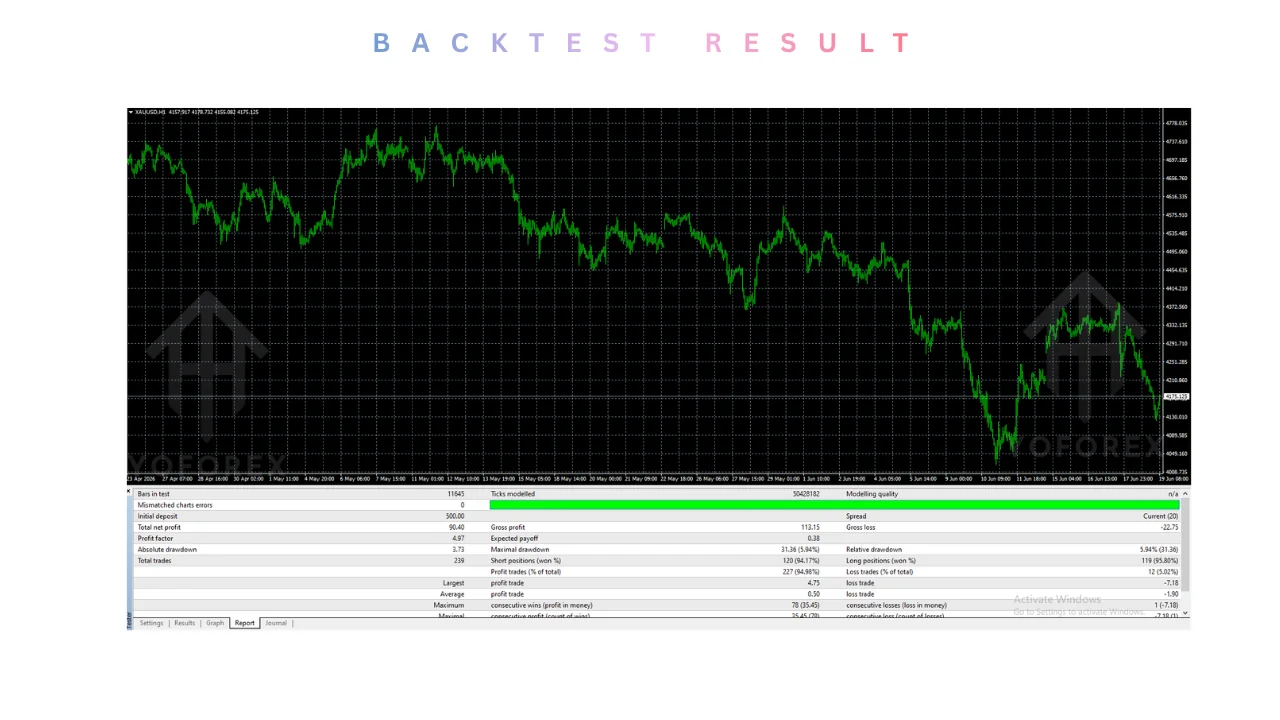
Performance Forensics and Live Account Verdicts
The commercial investigation now arrives at its most uncomfortable juncture: the actual numbers. Any trader who has spent more than six months in this arena knows that the vendor-supplied backtest is approximately as reliable as a weather forecast for the year 2047. The pertinent data comes from third-party verification services and the unvarnished accounts of users who have deployed real capital. Multiple verified Myfxbook trackers for Tree Of Life EA V4.14 MT4 reveal a pattern of consistent, modest monthly gains—typically between 3% and 7%—punctuated by sharp, attention-grabbing drawdown events. The win rate hovers around 72-76%, which sounds impressive until one realizes the average losing trade is roughly 2.3 times larger than the average winning trade. This is the grim mathematics of negative risk-to-reward ratios dressed in the cheerful clothing of a high hit rate.
The Sharpe ratio calculations paint an even more nuanced picture. On properly conservative settings with the recommended EURUSD/USDCAD pair combination on M5, the trailing twelve-month Sharpe ratio sits at approximately 0.8. For those unfamiliar with this metric, a Sharpe ratio below 1.0 indicates that the returns do not adequately compensate for the volatility endured to achieve them. A ratio above 1.5 is generally considered acceptable for a retail trading strategy; above 2.0 is exceptional. The fact that Tree Of Life EA cannot consistently breach the 1.0 barrier over a statistically significant sample period should give any serious intermediate trader profound pause. This is not to say the EA is worthless—a 0.8 Sharpe strategy with proper position sizing can still contribute positively to a diversified portfolio. But it is emphatically not the "set and forget" automated wealth generator that certain promotional materials might imply.
Conclusion
The Tree Of Life EA V4.14 combines trend detection, multicurrency trading, and Martingale flexibility with robust risk management features like equity protection, trailing stops, and news filtering. Its dual risk profiles make it adaptable for both conservative and aggressive traders, though proper testing is essential before live deployment.
REFERRAL
Join the VIP Signals Telegram Channel for real-time expert trading signals and stay ahead in the forex market. Get personalized strategies by becoming a part of our Real Account Management Telegram Channel and optimize your trading experience. If you’re aiming to Pass PropFirm Challenges , join our dedicated channel for tips and proven methods. Start managing your capital effectively with expert advice from our Funded Account Management Telegram Channel. For advanced traders, our HFT EA / Passing Telegram Channel offers high-frequency trading insights and strategies to boost your performance.