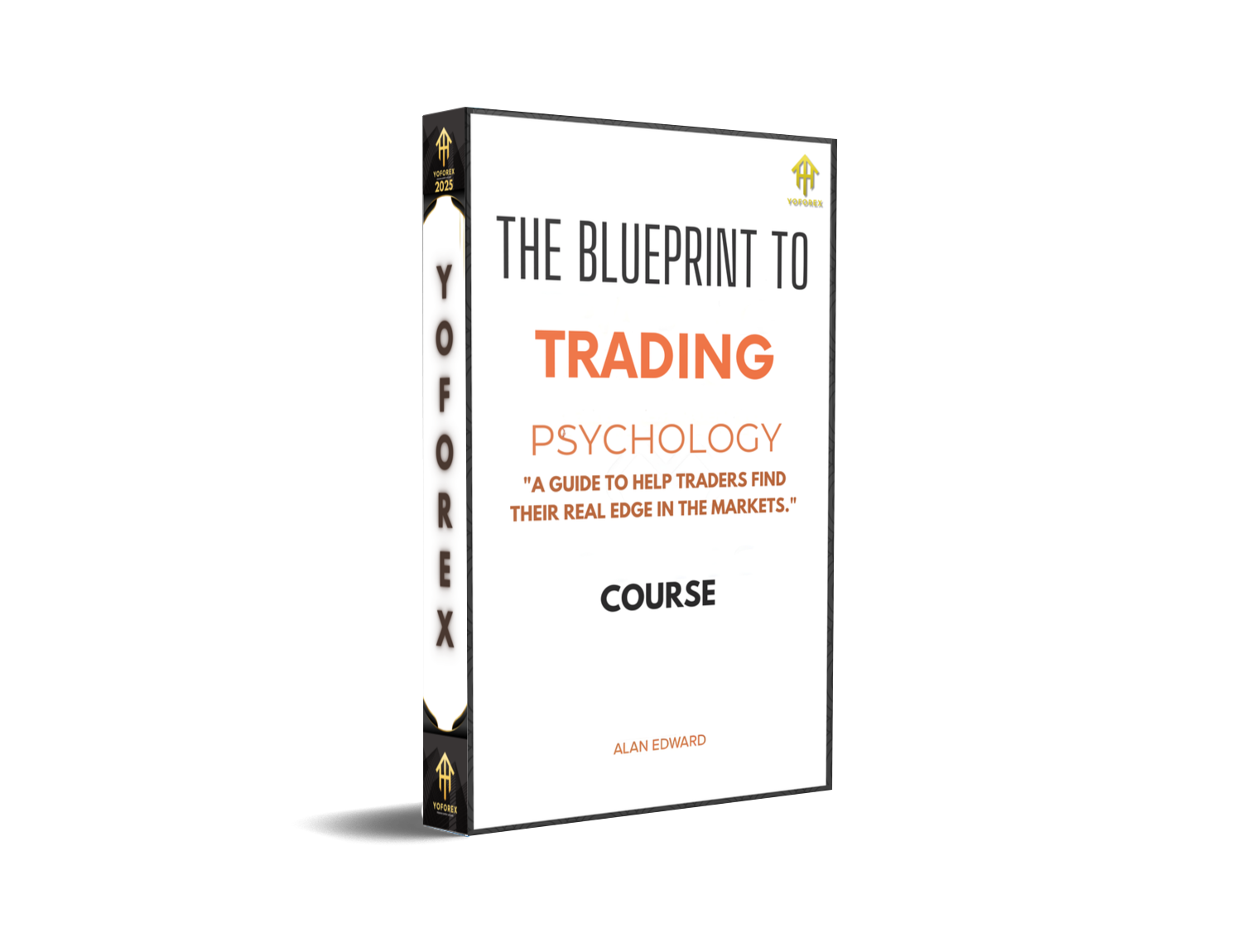
The Blueprint to Trading Psychology: Mastering the Mindset for Consistent Profits
Most traders spend years searching for “the perfect strategy” — new indicators, new robots, new patterns — only to end up frustrated, confused, and emotionally drained. The truth? Your mindset matters more than your method. You can have a strategy with a 90% win rate and still blow your account… but a trader with the right psychology can take even a simple 50% system and grow consistently.
That's where The Blueprint to Trading Psychology Course steps in. This isn’t just another motivational lecture; it’s a deep dive into thinking in probabilities, reshaping how you see wins, losses, and long-term profitability. And yeah, it might feel weird at first — coz trading forces you to think in a way that's totally opposite to how we’re wired naturally. But once you grasp the probability mindset, everything starts clicking into place… slowly at first, then like magic.
This blog unpacks the core wisdom of the course in a clear, practical, and slightly conversational manner. Let’s break it down.
Understanding Why Probabilities Matter
Most traders lose not because their strategy is bad, but because they expect certainty in a world built on uncertainty. Your brain wants predictable outcomes. Trading gives you randomness. Conflict begins.
To win long-term, you must:
- Accept that losses are part of the game
- Treat each trade like one event in a long series
- Focus on execution, not outcome
- Trust the math behind your edge
- Stop making emotional decisions based on temporary results
Thinking in probabilities means you stop being shocked by losses and stop celebrating wins too early. Instead, you start behaving like a casino… calm, disciplined, and consistent. You know the edge plays out over time, not in one single trade.
Why Most Traders Fail at Trading Psychology
Let’s be real. Even experienced traders fall into the same psychological traps:
- Revenge trading
- Over-leveraging
- Closing winners early out of fear
- Holding losers out of hope
- Impulsive entries
- Overconfidence after a win streak
- Emotional damage after a bad loss
The Blueprint course explains that the real enemy isn’t the market… it’s your own cognitive biases. Humans hate uncertainty, but trading is uncertainty. Most of what feels “natural” to us actually harms our trading results.
Winning traders learn how to override human instincts and think like statisticians.
What It Means to “Believe in the Math”
When the course says you must “believe in the math,” it doesn’t mean memorizing formulas or calculating probabilities manually. It means trusting that:
- A winning strategy plays out over hundreds of trades
- Your edge is statistical, not emotional
- A losing streak does not mean you're a bad trader
- A win does not mean you’re invincible
- Consistency of execution is more powerful than prediction
Imagine flipping a coin. Even if the coin is slightly biased (like a profitable strategy), you may still see streaks of 7 losses, then 5 wins, then 3 losses. The outcome is random, but the long-term distribution is predictable.
That’s trading.
Adopting the Probabilistic Mindset
Here’s what the Blueprint Course teaches traders to adopt as part of their mental framework:
1. Every Trade Is Just One of Many
You stop caring what the next trade does. Instead, you care about the next 100 trades. This removes emotional pressure.
2. A Loss Is Not a Mistake
A loss simply means probability played out. If you followed your plan, the loss is a win in discipline.
3. A Win Is Not a Validation
Beginners often think, “I won, so I’m right.” Wrong. You can win on a bad decision too. A win only matters if you followed your system.
4. You Focus on the Process, Not the Outcome
This is the biggest psychological shift. You train your mind to think:
“Did I execute correctly?”
Not: “Did I win money today?”
5. You Stop Expecting the Market to Behave
When you expect the market to move in your favor, you start forcing trades. Probability-based thinking eliminates this need.
Exercises That Help Build This Mindset
The course provides practical exercises, and below you’ll find adapted versions of some of the best ones:
Exercise 1: Loss Neutrality
Write down 20 past trades where you felt emotional pain.
Now, write what should have happened if you were thinking probabilistically.
This rewires your emotional response.
Exercise 2: Pre-Trade Checklist
Before entering any trade, ask:
- Does this fit my strategy?
- Is risk defined?
- Is the reward at least 1.5x risk?
- Am I entering from logic or emotion?
You won’t believe how this fixes impulsive behavior.
Exercise 3: The “100-Trade Challenge”
Commit to taking 100 trades using only one setup. Track:
- Wins
- Losses
- Risk-to-reward
- Emotions
- Execution accuracy
This exercise alone transforms traders.
How Thinking in Probabilities Improves Your Trading
Here’s what starts happening once you internalize this blueprint:
1. You Stop Panicking During Drawdowns
You know drawdowns are part of statistical variance.
2. Your Winners Become Bigger
Because you stop closing early due to fear.
3. Your Losers Shrink
Because you stop holding them emotionally.
4. You Become More Disciplined
The market stops controlling you. You control yourself.
5. Your Confidence Grows
Your self-worth stops depending on win/loss outcomes.
6. Your Trading Performance Becomes Consistent
Not because the market changed — but because you changed.
The Psychology Shift That Separates Pros from Amateurs
Think of two traders using the same strategy:
- Trader A loses money
- Trader B becomes successful
The difference?
Trader B thinks in probabilities. Trader A thinks emotionally.
The Blueprint Course teaches you to:
- detach from outcomes
- detach from money
- detach from needing to be right
- detach from fear and greed
Once you’re detached, your brain stops sabotaging you.
Why Believing in the Math Is the Key to Long-Term Success
Trading is a business. And like any business, it grows when:
- processes repeat
- risk is controlled
- data is tracked
- emotions do NOT take decisions
This is why the course says:
“Begin to believe in the math, and you’ll be well on your way.”
It’s not poetic. It’s literally the truth. Your job is not to predict. Your job is to:
- find an edge
- trust the edge
- trade the edge
- repeat the edge
Conclusion — Your Journey Begins With Your Mind
If you're struggling in trading…
If you're emotionally drained…
If you're tired of inconsistency…
You don't need a new indicator.
You need a new mindset.
The Blueprint to Trading Psychology Course gives you exactly that — a structured, realistic, and proven way to think in probabilities, trust the math, and execute with discipline.
This is the mindset that creates professional traders.
Not flashy strategies. Not luck.
A disciplined, probability-based psychological framework.
Start thinking differently, and your trading will start changing too.
Comments
Leave a Comment