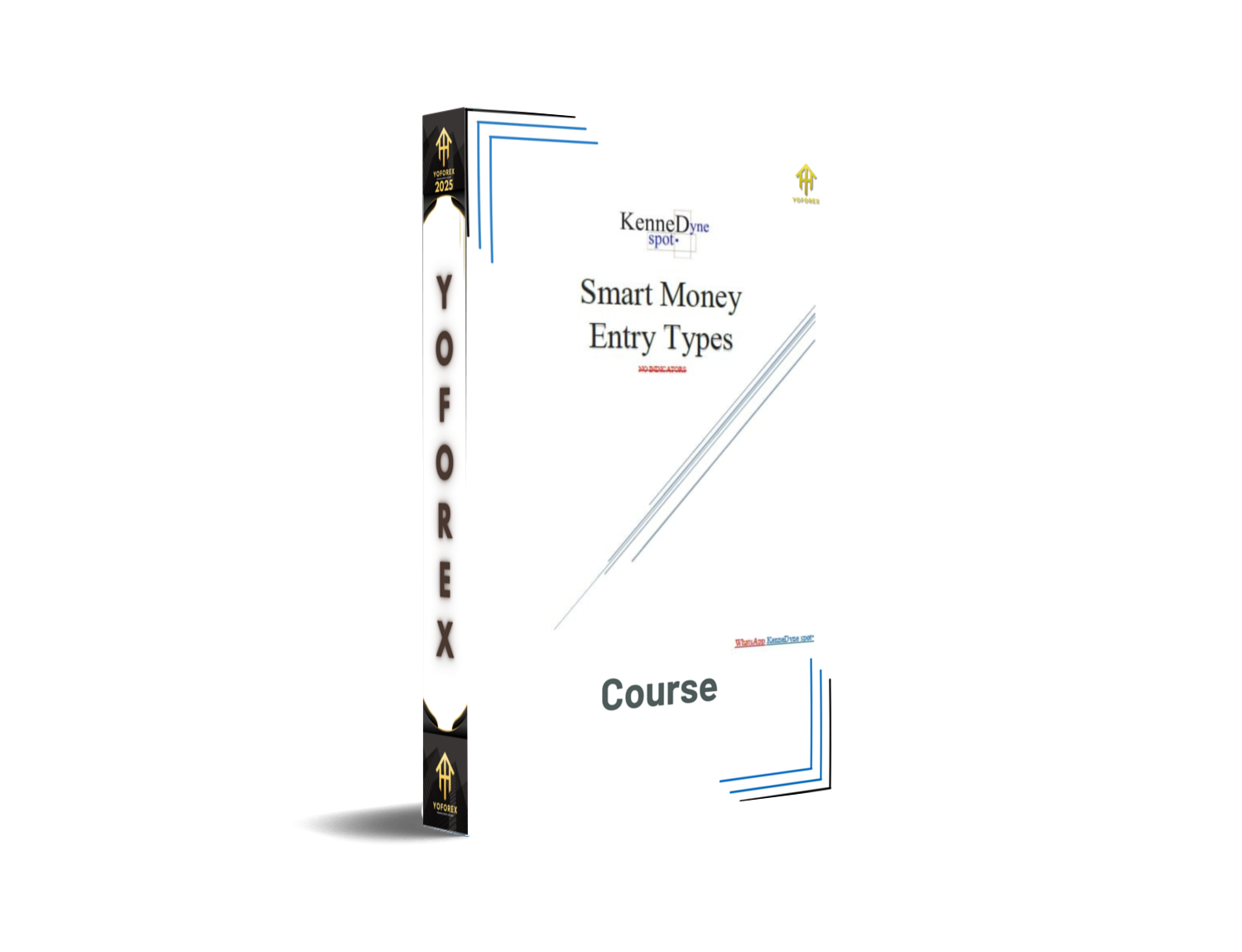
Smart Money Concepts (SMC) has completely changed the way modern traders look at the Forex market. You’ve probably heard people say things like “market makers hunt your stop-loss,” or “you need to trade like institutions”… and honestly, those statements aren’t totally wrong. The market behaves in a certain rhythm, and once you start understanding how liquidity, imbalance, order blocks, and smart money entries work, trading becomes way clearer than before.
This Smart Money Entry Types Course is designed to give you a complete breakdown of how institutional traders enter the market — not using basic support-resistance, but using deeper logic based on liquidity engineering and price delivery. And don’t worry, we’ll keep it simple, practical, and easy enough so you don’t feel lost halfway through the reading. Sometimes SMC content online is too theoretical, too confusing… or just copied around. Here, the goal is to explain things as if we were talking over a coffee.
Let’s begin.
What Exactly Are Smart Money Entry Types?
Smart Money entry types are the specific high-accuracy entry triggers used by big institutions (banks, hedge funds, algos) to position themselves in the market. These aren’t random entries — they are built around:
- Liquidity grabs
- Breaks of structure
- Order blocks
- Imbalances
- Internal/external range liquidity
- Premium & discount pricing
In simple words, smart money doesn’t enter because an RSI is oversold or because a trendline was drawn nicely. They enter based on where the liquidity lies, where retail traders have placed stops, and where the market intends to rebalance price efficiently.
The Smart Money Entry Types Course focuses on helping you identify exact moments where probability is high, risk is low, and institutional intention is visible on the chart. Most traders lose coz they enter too early or too late — SMC helps eliminate that.
Key Smart Money Entry Types Explained
Below are the major institutional entry models you’ll learn in the course. Each one works differently, but all of them revolve around structure, liquidity, and price delivery.
1. Break of Structure (BOS) Entry
This is the classic SMC entry.
Price first creates a internal liquidity pool by forming equal highs/lows or a trendline. Then, once liquidity gets taken out, the market shows a Break of Structure, indicating a shift in direction.
How you enter:
- Wait for liquidity to be swept.
- Confirm a clean BOS.
- Find the first pullback to the origin of displacement.
- Enter with stop-loss below/above the start of the impulse.
This entry is clean, simple, and perfect for intraday setups.
2. ChoCH (Change of Character) Entry
ChoCH is slightly more aggressive than BOS. It appears earlier, giving you a better risk–reward but requiring more confirmation.
A ChoCH indicates the first sign of reversal. After price sweeps liquidity, it quickly changes character by shifting from bearish orderflow to bullish (or vice versa).
Why traders love it?
Coz it gives extremely early entries, allowing for RR ratios like 1:10 or 1:15 in a good move.
3. Order Block Mitigation Entry
Order blocks (OBs) are institutional footprints where big players place their buy/sell orders.
A bullish OB is the last down candle before an aggressive move up.
A bearish OB is the last up candle before a strong move down.
Entry steps:
- Identify BOS or liquidity sweep.
- Mark the correct OB (don’t choose every random candle).
- Wait for price to return (“mitigate”) the block.
- Enter on the refined region of the OB.
This is one of the most used smart money entry types in the entire SMC ecosystem.
4. FVG (Fair Value Gap) / Imbalance Entry
Fair Value Gaps are inefficiencies caused when price moves too fast without creating opposite orders.
Institutions tend to rebalance these zones.
The FVG entry works like this:
- Identify a displacement move with an imbalance.
- Wait for price to enter that imbalance.
- Enter with lower risk by focusing on the midpoint of the imbalance.
FVG entries often give sniper-type setups.
5. Liquidity Grab Entry
One of the simplest yet deadliest accurate SMC entries.
The market first collects liquidity above highs or below lows, trapping retail traders. Then, immediately after the sweep, price reverses sharply.
Entry logic:
- Identify equal highs/lows, trendline touches, or liquidity zones.
- Wait for stop-hunt.
- Enter the reversal candle after the sweep.
This is pure institutional trading psychology at work.
6. Premium & Discount Entry Model
This is part of Fibonacci-based SMC methodology.
- In an uptrend → You only want to buy from discounted (cheap) areas.
- In a downtrend → You only want to sell from premium (expensive) areas.
Combine premium/discount logic with OB + BOS, and you get extremely high-probability trades.
Why These SMC Entries Work So Well?
The truth is — retail trading strategies fail because they react to price, not understand price. Smart Money entry types flip that mindset.
These entries are powerful coz:
- They follow institutional footprints.
- They use liquidity as a trigger.
- They align with real market structure, not indicators.
- They help avoid bad entries and fake breakouts.
- They enhance R:R dramatically.
Even a trader who wins only 40% of trades can be profitable using SMC entries because the RR is so high.
Examples of Real Market Application
Let’s say EURUSD is in a clear downtrend. Retail traders are buying because RSI is oversold. But institutions are selling because:
- Price is at premium.
- A FVG imbalance is present.
- Liquidity sits above equal highs.
- A breach of structure supports selling.
When retail traders buy → smart money uses their stops as liquidity.
When smart money sells → they do it from the OB or FVG zone.
That’s why understanding these entry types becomes absolutely essential.
What You’ll Learn in the Smart Money Entry Types Course
Course Breakdown
- Complete SMC foundation
- Market structure the smart money way
- Identifying real liquidity vs fake liquidity
- Break of structure, ChoCH, displacement
- Order blocks (advanced refining techniques)
- Imbalances & FVG trading
- SMC entry triggers (8+ models)
- Multi-timeframe analysis
- Intraday & swing trading models
- Psychology & risk management
By the time you finish the course, you’ll understand why certain candles move the way they do, why the market “fakes out”, and how institutions position themselves for massive moves.
Who Is This Course For?
This course is perfect for:
- Beginner traders confused about entries
- Intermediate traders stuck at break-even
- Scalpers, intraday, or swing traders
- Anyone wanting to trade like institutional players
- Traders tired of random indicator strategies
If you’ve been losing coz of early entries, revenge trading, or chasing breakouts, this course is honestly a game changer.
Final Thoughts – Start Trading Like Smart Money
Smart Money entry types are not magic, but they clear the fog around how price truly moves. When you learn liquidity, structure, and OB/FVG-based entries, you stop trading based on hope and start trading based on logic.
This course breaks down everything step-by-step in a simple, digestible way, with no unnecessary jargon. It’s built for real traders who want practical skills that actually help them become profitable.



Comments
Leave a Comment