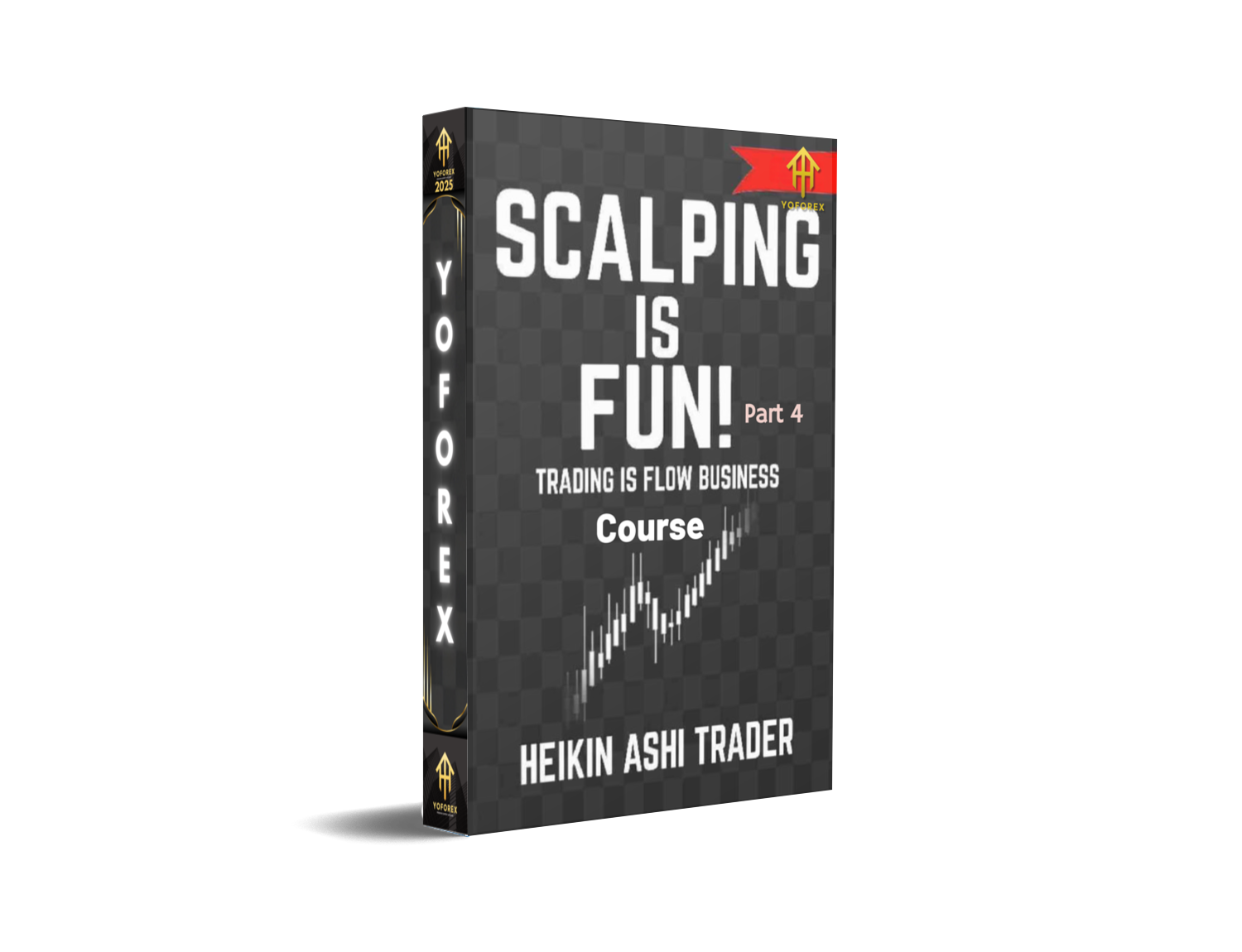
Scalping Is Fun! Part 4 – Trading Is Flow Business
In the world of trading, consistency isn’t about winning every day. It’s about knowing when to step in—and when to step out. Scalping Is Fun! Part 4 – Trading Is Flow Business by Heikin Ashi Trader takes a deep dive into this truth that many traders overlook.
If you’ve followed the previous parts of the Scalping Is Fun series, you already know it’s not just about techniques and entry points—it’s about mindset, discipline, and understanding the rhythm of the market. In this fourth part, the author explains why trading profits don’t come evenly spread across the month and how learning to “flow” with the market separates amateurs from pros.
Let’s unpack the key lessons from this insightful chapter.
The Uneven Nature of Trading
Trading is not like a 9-to-5 job. You don’t clock in and earn a fixed amount each day. The forex market, stocks, and indices—each follow their own rhythm.
Heikin Ashi Trader reminds us that results in trading are asymmetrical. There are days when your trades align perfectly with the market’s pulse, delivering smooth profits. And there are other days when the same setup just doesn’t work.
This randomness frustrates many beginners. They expect equal results, but trading doesn’t follow that logic. The market is like the ocean—it moves in tides, and trying to force trades against it is like swimming upstream.
So, the first major insight is simple yet powerful:
Not all days are created equal in trading.
Recognizing this helps traders protect capital and wait for the flow days—those periods when the market naturally supports your strategy.
The “Flow” State in Trading
The term “flow” is borrowed from psychology, often used in sports and creative work. It describes the state where action and awareness merge—you trade effortlessly, decisions feel natural, and results follow smoothly.
Heikin Ashi Trader applies this idea beautifully to scalping. Scalping is all about quick decisions, rapid execution, and precision timing. If your mind isn’t in sync with the market rhythm, you’ll likely make impulsive mistakes.
When you’re in flow:
- Your entries are sharp and confident.
- You recognize price action patterns instantly.
- You exit at logical points, not emotional ones.
When you’re not in flow, even your best setups fail. That’s when frustration creeps in and revenge trading begins.
Thus, trading becomes a mental game. Recognizing whether you’re “in flow” or “out of sync” can make or break your month.
Knowing When Not to Trade
A major theme in Part 4 is timing. The author emphasizes that successful traders know precisely when not to trade.
Let that sink in—avoiding trades is as important as executing them.
During sideways markets, low-volume sessions, or emotionally stressful periods, sitting on your hands is the best trade you can make. The temptation to “do something” often leads to unnecessary losses.
So how do you identify bad trading conditions?
Here are a few telltale signs:
- Volatility is too low (price barely moves).
- Market direction is unclear or keeps reversing.
- Major economic news is due within minutes.
- You’re mentally distracted or emotionally charged.
By filtering out low-probability sessions, you preserve both capital and confidence. As the author puts it, “You don’t have to trade every candle; you just have to trade the right ones.”
The Rhythm of Market Conditions
Heikin Ashi Trader compares trading to music—it has rhythm, tempo, and variations. Some days are full of fast beats (volatile movements), while others drag slowly (range-bound markets).
The trick is to recognize which song the market is playing today. Scalpers, especially, must adapt quickly.
If the tempo slows down—meaning the market is choppy or uncertain—it’s better to reduce position sizes or stay flat. When volatility picks up and momentum aligns with your signals, that’s when you go full throttle.
Think of it like dancing—you can’t force your own rhythm on the market. You must move with it.
Flow Business = Timing + Awareness
The title “Trading Is Flow Business” perfectly captures the essence of this part. It’s not just about charts and indicators—it’s about awareness.
Here’s how you can build your own sense of flow in trading:
1. Daily Preparation
Start every trading day with a quick mental and technical prep. Review major events, mark key levels, and visualize how you’ll respond to different scenarios.
2. Stay Emotionally Neutral
Flow doesn’t come when you’re chasing revenge trades or counting yesterday’s losses. Neutrality keeps your perception sharp.
3. Track Market Sessions
Each session (Tokyo, London, New York) has its unique rhythm. For scalpers, the London open often brings the best momentum. Track what time of day you perform best.
4. Don’t Force Trades
If setups aren’t showing up, don’t create them out of boredom. Wait for the market to come to you.
5. Recognize Your Internal State
If you’re tired, stressed, or distracted, step away. Trading tired is like driving drunk—you might get lucky once, but not for long.
By integrating these habits, your trading sessions become more predictable and enjoyable.
Practical Example: Flow vs. Force
Let’s take a simple example. Suppose you’re trading EUR/USD using a 5-minute scalping strategy with the Heikin Ashi candles.
- Scenario A (Flow Day):
Price reacts cleanly to support and resistance. Spreads are tight. You take three trades, two winners and one small loss. Emotionally calm, you follow your plan, and your account grows. - Scenario B (Forced Day):
Price action is erratic, spreads widen, and your setups look unclear. You hesitate, then overtrade. Small losses pile up, and frustration builds.
Same trader, same strategy—different market flow. Recognizing the difference is key to surviving long-term.
When Fun Becomes Success
The title Scalping Is Fun! isn’t just catchy—it’s philosophical. When you’re aligned with the market, trading actually becomes enjoyable. You stop fighting the charts and start flowing with them.
That’s when success starts to “turn by itself,” as Heikin Ashi Trader beautifully puts it. It’s not about chasing profits; it’s about synchronizing with the right conditions, letting the edge do the work.
Trading stops being stressful when you stop demanding daily results and instead focus on executing flawlessly on the right days.
Final Thoughts
Scalping Is Fun! Part 4 – Trading Is Flow Business teaches an essential truth: trading performance isn’t linear. You don’t earn like a salaried employee—you profit like an artist who understands timing, rhythm, and flow.
The best traders don’t just have great strategies; they have great timing. They know when the market offers opportunities—and when it’s better to stay patient.
If you master that, you’ll find that trading can truly be “fun,” just as Heikin Ashi Trader promises.
Comments
Leave a Comment