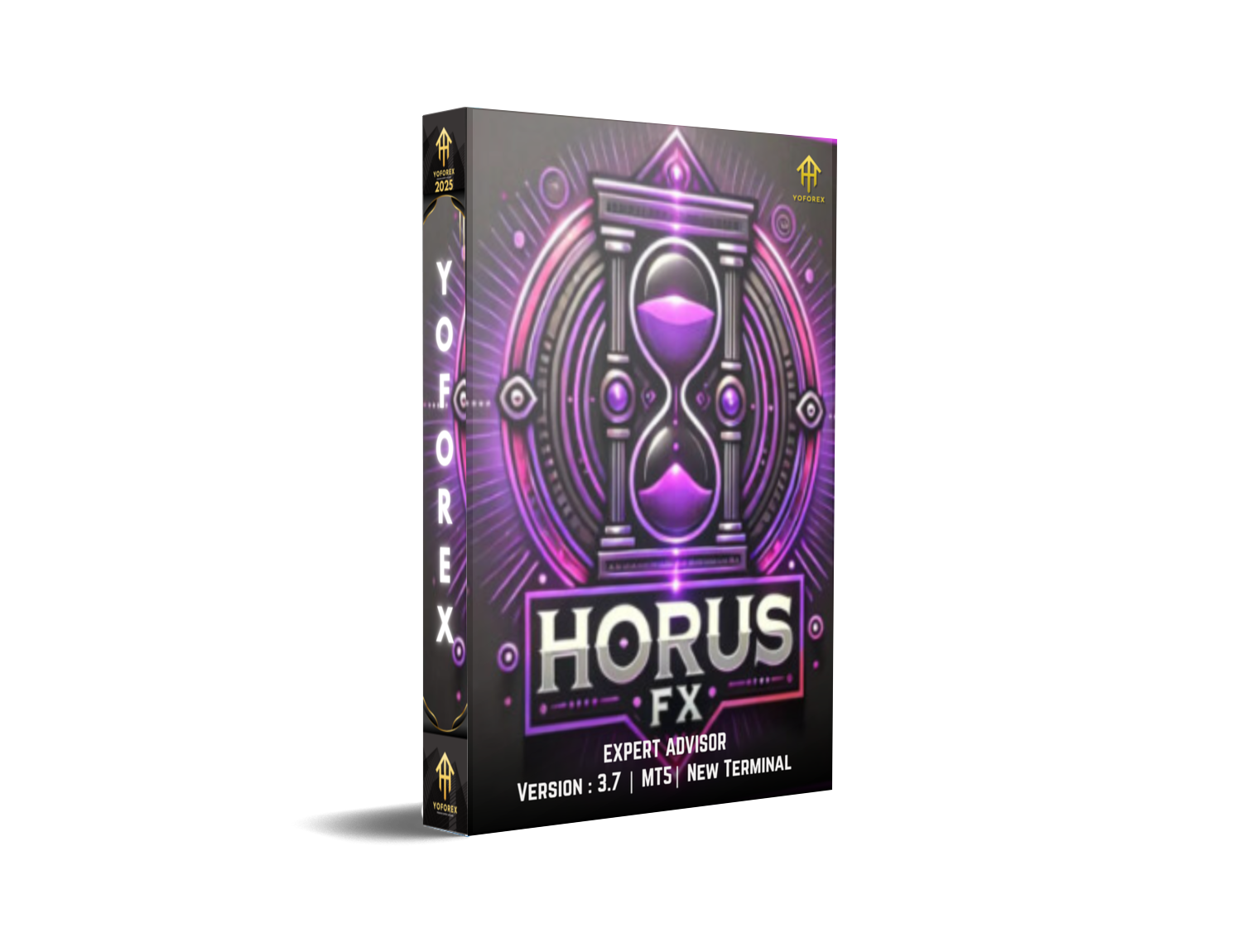
HORUS FX PRO EA V3.7 MT5 — Trend & Breakout Precision For US30, XAUUSD, and Indices
If you’ve been hunting for an MT5 Expert Advisor that doesn’t spam trades or blow up your risk profile, you’ll probably vibe with Horus FX Pro EA V3.7. It’s built for clean, rules-driven entries on US30, XAUUSD, and other major indices, focusing on trend continuation and breakout confirmation while keeping risk tight with single-position logic. In plain English: no messy grid spirals, no martingale roulette. Just one thoughtful trade at a time based on structure and volatility—coz discipline beats drama, always.
Below, I’ll break down how the EA thinks, what settings actually matter, the kind of performance profile you should expect, and how to install it the right way (including a few pro tips you’ll wish you knew earlier). Let’s get into it.
What Is Horus FX Pro EA V3.7?
Horus FX Pro EA V3.7 is an automated trading system for MetaTrader 5 (MT5) that targets high-quality moves on indices and gold. Its edge sits at the intersection of trend detection and structured breakouts—only engaging when price clears a logical level (think range highs/lows or session levels) with a confirming volatility pulse.
- Platform: MT5
- Markets: US30 (Dow), XAUUSD (Gold), plus selected indices
- Style: Trend + breakout, single-trade execution (no grid, no martingale)
- Risk Control: Fixed SL/TP with optional trailing logic and time/session filters
- Audience: Traders who prefer a calmer equity curve and predictable risk
The philosophy is simple: quality over quantity. The EA waits. It filters. It skips noise. And when conditions align, it executes one trade with a pre-defined stop, a clear target, and a transparent plan for managing the aftermath (trail, partial, or full exit).

How Horus FX Pro Finds Its Trades
Without giving away proprietary sauce, here’s the high-level logic:
- Market Structure Scan
The EA maps recent swing points and session ranges to figure out whether the path of least resistance is up, down, or sideways. - Breakout Confirmation
It monitors predefined levels—often session highs/lows or volatility boxes—and triggers only if momentum confirms (e.g., range expansion, volatility pop). - Single-Position Risk
On entry, Horus FX Pro sets a hard stop and fixed target (both adjustable). You can enable a trailing stop to lock gains if price keeps running. - Session Awareness
Indices and gold are hyper during London/NY overlaps. The EA includes session filters so you can avoid dead hours and thin liquidity. - Trade Management
Once in, the EA manages the position using your chosen profile—static TP/SL, breakeven triggers, and optional trailing.
The result? Fewer, more meaningful trades that are easier to review and scale.
Key Features (Why Traders Like It)
- • Single-Trade Logic: No grid. No martingale. One clean position per setup.
- • Trend + Breakout Entries: Capitalizes on momentum after structure confirms.
- • Session Filters: Trade when liquidity’s real (London/NY), skip the chop.
- • Hard SL & Fixed TP: Transparent risk; you always know worst-case.
- • Optional Trailing Stop: Let winners breathe while protecting open profit.
- • Time-Based Exit (Optional): If price stalls, get flat before spread widens.
- • News Buffer (Manual/External): Pause around high-impact events if you prefer.
- • Symbol Profiles: Tuned for US30 and XAUUSD; adaptable to other majors.
- • Drawdown-Aware: Designed to avoid pyramids and runaway exposure.
- • Minimal Inputs: Sensible defaults; tweak a few, not thirty.
- • Clean Charts: Focus on price; no indicator soup.
- • Backtest-Friendly: Works on MT5’s tester with tick data and variable spreads.
Recommended Setup (A Practical Starting Point)
These are starting points—not financial advice. Always validate with your broker’s spreads and your own risk appetite.
- Broker & Account: ECN/RAW spread if possible; low latency helps, especially on US30.
- VPS: Recommended for stability during sessions.
- Timeframes: M15 or H1 are solid defaults for trend+breakout logic.
- Risk Per Trade: Start tiny—0.5% or less. Indices and gold move fast.
- Lot Size: Begin with 0.01 and scale after you see real-world behavior.
- TP/SL Defaults:
- US30: SL 150–220 pts, TP 250–400 pts (adjust for volatility regime).
- XAUUSD: SL 1500–2500 points (i.e., $1.5–$2.5), TP 2500–4000 points (i.e., $2.5–$4.0).
- Session Filter: Enable London open → NY midday; disable late sessions to dodge spread flares.
- Trailing: Optional; consider activating after price moves 1R in your favor.
Performance Profile: What “Good” Looks Like
A realistic performance arc for a single-trade, non-martingale EA on indices/gold looks like this:
- Win Rate: 40–60% (depends on how tight your stop is and whether you trail).
- Average R/R: 1.2–2.0R if you’re not choking exits.
- Equity Behavior: A gentler slope with controlled pullbacks (no grid cascades).
- Trade Frequency: Moderate. Expect clusters around volatility windows; dry spells during range compression.
- Drawdowns: Typically short and shallow if you keep risk/tight sessions. Over-optimizing TP/SL to the last pip tends to worsen drawdown; don’t do that.
Remember: past performance ≠ future results. The point isn’t perfect equity; it’s a strategy that’s auditable, manageable, and scalable without roulette-style risk.
Installation & First-Run Checklist (MT5)
- Copy Files
Place the EA (.ex5or.mq5) in:File → Open Data Folder → MQL5 → Experts - Restart MT5
Or refresh the Navigator pane so MT5 loads the EA. - Attach to Chart
- Open US30 or XAUUSD (or your target symbol).
- Choose M15 or H1.
- Drag the EA to the chart, enable Algo Trading.
4. Inputs to Review
- Risk % / Fixed Lot (use one, keep it conservative).
- TP/SL (pick a sensible R/R; don’t over-fit).
- Session Filter (enable London/NY hours).
- Trailing (optional; consider post-1R trail).
- Time-Based Exit (optional; useful near session close).
5. Run on Demo
Trade at least 2–3 weeks to watch how it behaves across news cycles.
6. Scale to Small Live
Start with the lowest lot and only scale after several consistent weeks.

Who Is Horus FX Pro For?
- Structure-First Traders who value clarity over constant action.
- Risk-Sensitive Users who avoid grids and refuse martingale.
- Index/Gold Fans who want quality entries in volatile windows.
- Busy Pros who need autopilot help but still want to understand what the bot is doing.
If you prefer hyper-frequent scalps or grid recovery, this EA might feel too selective. If you want clean logic and predictable risk, it’ll feel like home.
Best Practices (Make It Work For You)
- Keep Risk Tiny At Start: 0.25–0.5% per trade is fine.
- Respect Sessions: Indices/gold are session-driven; don’t force Asia unless you’ve tested it.
- Watch Spreads & Slippage: Especially near news or daily rollover.
- Avoid Over-Optimization: The extra 0.1R on paper often breaks in real flow.
- Journal Outcomes: Note which levels the EA loves (session highs/lows, prior day extremes).
- Don’t Run 10 Symbols At Once: Focus on US30 and XAUUSD first; master them, then expand.
- Update With Care: New versions = re-check defaults; don’t assume your old inputs carry perfectly.
Pros & Cons
Pros
- Predictable risk; no martingale, no grid
- Trades when it matters (trend + breakout confirmation)
- Session filters and time-based exits reduce “overnight weirdness”
- Simple input set; realistic to manage and scale
Cons
- Fewer trades than hyper scalpers (patience required)
- Needs decent spreads/latency for best fills
- Breakout strategies can whipsaw in rangebound regimes (mitigated by filters, not eliminated)
Final Take
Horus FX Pro EA V3.7 MT5 is for traders who want structured entries and clean risk on US30 and XAUUSD. It doesn’t promise fairy-tale win rates or martingale “recoveries.” Instead, it leverages trend + breakout confirmation, runs a single position with a hard stop, and gives you tools (sessions, trailing, time exits) to keep control when markets get loud.
Use it with humility: small risk, right sessions, and realistic expectations. Do that, and you’ll discover the real power of a calm, rules-driven EA—one that’s actually sustainable. Trade safe, test thoroughly, and let the data—not impatience—guide your scaling.
Comments
Leave a Comment