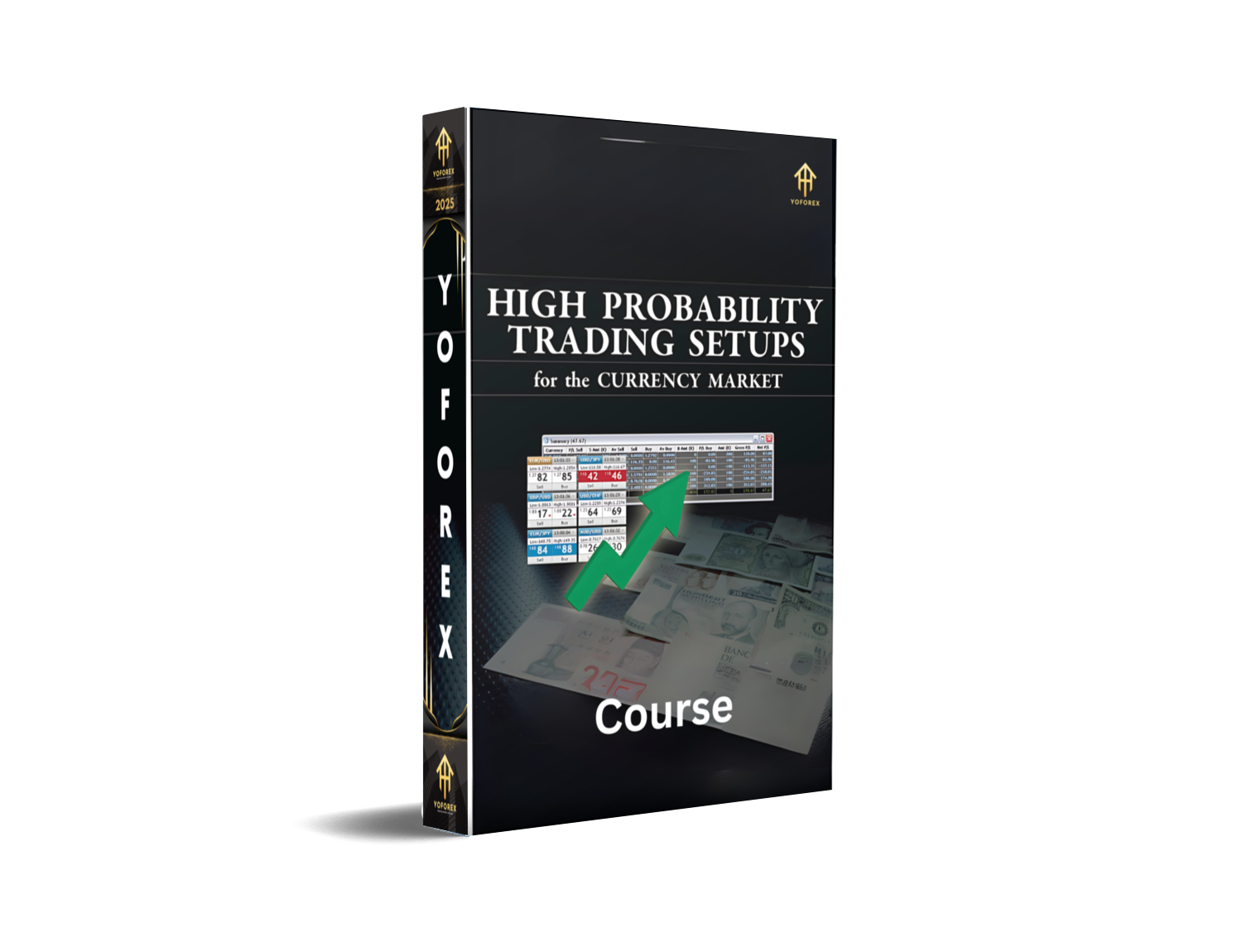
Let’s face it—most traders jump into the markets with hope, a couple of candlestick patterns, and a whole lotta YouTube. The result? Lost capital, shaken confidence, and a search for “the one course that works.”
But here's the thing…
There is a smarter way.
Welcome to High Probability Trading Setups, where we don’t just give you theory—we give you proven rules and strategies that help swing the odds in your favor. Whether you’re day trading the EUR/USD or swinging gold on the H1, this course outlines battle-tested frameworks based on market logic, price action, and psychology.
Ready to stop gambling and start trading like a pro? Let’s dive into the Top 10 Trading Rules and 9 powerful trading setups that make up this practical guide to consistent profits.
Part 1: Top 10 Trading Rules for High-Probability Setups
1. Bank Your Pips, But Don’t Marry the Chart
Sure, 15 pips might be enough for a scalp. But some setups scream for 50+. Use your strategy AND the chart context. Don't trade blindly—trade intelligently.
2. Logic Wins; Impulse Kills
The market rewards calm, repeatable logic. Emotional entries? That’s a losing game. Wait for confluence, not excitement.
3. Never Risk More Than 2% Per Trade
This one’s non-negotiable. Blow-ups don’t happen because you’re wrong once—they happen when you go all in on the wrong trade.
4. Trigger Fundamentally, Enter Technically
News moves the market; charts guide your entry. Use both. If the Fed’s hiking, don’t long EUR/USD into resistance.
5. Always Pair Strong with Weak
Relative strength is a golden key. Long the strongest vs. the weakest. Example? Long GBP/JPY when GBP is strong and JPY is weak.
6. Being Right but Early = Still Wrong
Ever been "right" and still lost money? Timing is everything. You’re not early—you’re just wrong in practice. Wait for confirmation.
7. Know the Difference: Scaling In vs. Averaging a Loser
Adding to a trade after confirmation is smart scaling. Doubling down on a losing position without proof? That’s called revenge trading.
8. What’s Mathematically Optimal Is Psychologically Hard
The best trades often don’t feel good. Buying after a spike, selling at extreme highs—it’s emotionally tough, but statistically sound.
9. Risk Is Predictable; Reward Is Not
You control the stop-loss. The market decides the profit. So structure trades where your downside is fixed, but your upside is flexible.
10. No Excuses, Ever
You clicked the button. Own the result. Your broker, internet, or news spike isn’t to blame. If you can’t accept the loss, don’t take the trade.
Part 2: High-Probability Trading Setups You Can Start Using Today
Let’s get practical. These aren’t holy grail systems—they’re setup frameworks that offer edge when combined with proper rules and risk control.
+ 5-Minute “Momo” Trade
Perfect for volatile news releases or London/NY overlap. Wait for a breakout candle on M5, followed by confirmation (engulfing or continuation candle). Set tight stop below breakout base.
+ “Do the Right Thing” CCI Trade
When the CCI (Commodity Channel Index) hits +200 or -200, many assume reversal. But trend-followers “do the right thing”—go with it. Enter with the momentum and ride until divergence.
+ Moving Average + MACD Combo
Use 20 and 50 EMA for trend bias. MACD histogram cross for momentum. Entry on EMA bounce + MACD signal. Works best on H1 or H4.
+ RSI Rollercoaster
On ranging markets, trade RSI extremes (above 70 = sell, below 30 = buy). Add price action support/resistance to filter fakeouts.
+ Pure Fade Setup
Markets overreact. This setup bets on mean reversion after extreme news or parabolic moves. Enter on signs of exhaustion (e.g., doji, volume drop).
+ The Memory of Price
Use previous highs/lows from prior sessions or weeks. Price often respects these “memory zones.” Enter on bounces or clean breaks.
+ 7-Day Extension Fade
After 7 straight bullish or bearish days, look for reversal signals. Momentum usually cools after 5–7 consecutive candles in one direction.
+ Turn to Trend
Often, price breaks a range, fakes out, then turns back into the real trend. Enter on fakeout failure + confirmation candle back into trend direction.
A Word on Backtesting and Journaling
Don't just read these setups—test them. Backtest each one on your preferred asset (e.g., EUR/USD on M15 or Gold on H1). Journal every trade you take, noting:
- Setup used
- Entry trigger
- Stop/target
- Trade result
- What you could improve
Your edge isn’t just in the setup—it’s in mastering the process.
Why These Setups Work (and When They Don’t)
These setups don’t rely on lagging indicators alone. They work because they:
- Respect market structure
- Use confluence, not just single triggers
- Focus on risk management first
However, no setup wins 100% of the time. The goal isn’t perfection—it’s probability. Lose small, win big. And don’t overtrade.
Final Thoughts: Trading Is a Game of Patience, Not Perfection
If you’ve made it this far, you’re already ahead of 90% of traders.
Most folks scroll Instagram during trades. You? You’re studying frameworks and learning discipline. That’s the difference between hoping for profits… and actually earning them.
So next time you see a chart setting up, ask yourself:
“Does this follow one of my rules? Is it one of my high-prob setups? Or am I just bored?”
Answer honestly, trade responsibly—and keep stacking small wins.
Join our Telegram for the latest updates and support
Comments
Leave a Comment