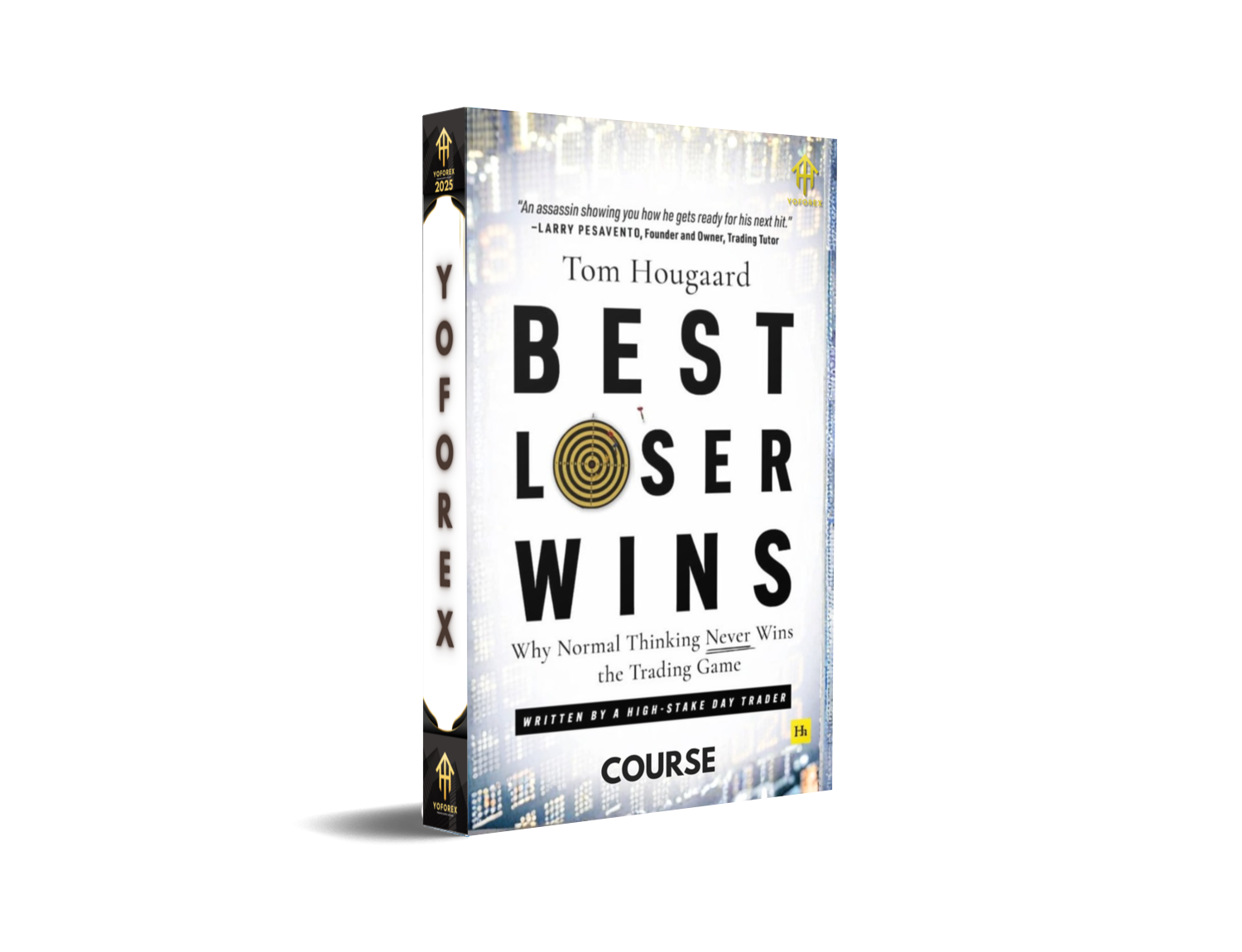
Best Loser Wins: The Brutal Trading Truth Most People Avoid
Most traders obsess over entries.
New indicator, new pattern, new “secret setup” from some YouTube guru… and still the account curve goes down.
Tom Hougaard, in Best Loser Wins, hits you with a much harsher truth: it’s not your indicator that’s broken, it’s your relationship with losing. How you feel about losses quietly decides your long-term results, your emotional health, and honestly, the direction of your whole life.
Sounds dramatic? Maybe. But think about it…
If every loss makes you angry, scared, or desperate to “get it back,” how long before you:
- Double your lot size out of revenge?
- Break your rules coz “this one looks perfect”?
- Close a good trade early just to avoid the pain of it going against you?
The book’s core message is simple but uncomfortable:
The best traders aren’t the best winners.
They are the best losers.
And that’s exactly what this blog is about—how to turn losing from a personal attack into a professional cost of doing business.
1. Why Most Traders Look in the Wrong Place
Most traders start like this:
- Learn some technical analysis
- Memorise patterns, candlestick names, “perfect setups”
- Add 4–5 indicators
- Expect profit to magically appear
Then reality hits. Everyone has access to technicals. Everyone can draw a trendline. Everyone can learn support and resistance, Fibonacci, supply and demand… and yet almost everyone still loses.
So what separates the consistent 1% from the struggling 99%?
It’s not:
- A magical broker
- A holy grail indicator
- Secret insider news
It is:
- How they react to uncertainty
- How they respond to losses
- How disciplined they stay under pressure
You and a top trader could trade the exact same system. Same entry rules, same stop loss, same targets. Over 100 trades, your results could be completely different—just because of how each of you handles losing streaks, boredom, FOMO, and fear.
In other words: the edge is not only in the system; it’s in you.
2. What It Actually Means to Be “The Best Loser”
“Best loser” sounds negative at first, but in trading it’s a superpower.
Being an outstanding loser means:
- You can take a stop loss without emotional drama
- You don’t attach your identity to a single trade
- You don’t spiral into revenge trading after a loss
- You don’t become overconfident after a big win
Losses become data points, not emotional wounds.
Most traders secretly want to be right, not profitable. They’ll hold a losing trade coz they don’t want to admit they were wrong. They’ll add to losers, widen stops, pray the market “comes back” so their ego stays safe.
The best losers do the opposite:
- They accept wrong decisions quickly
- They cut the trade
- They move on to the next opportunity
Cold. Clean. Professional.
It’s not that they enjoy losing. They just don’t fear it anymore. And when you stop fearing losses, you stop doing stupid things to avoid them.
3. Thinking in Probabilities, Not Predictions
One of the biggest mental shifts in Best Loser Wins is moving from certainty to probability.
Bad traders think like this:
“This setup must work. It looks perfect.”
Good traders think like this:
“This setup has an edge over 100+ trades. This individual trade can still lose.”
See the difference?
When you think in probabilities:
- A losing trade is not a failure
- A winning trade is not proof you’re a genius
- Both are just outcomes within a larger sample size
If you risk 1% per trade, your long-term expectancy is positive—even tho half your trades lose. That means you get paid for handling losses correctly, not for avoiding them.
So the real skill becomes:
- Can you follow the plan during a 5–7 trade losing streak?
- Can you still execute the next signal cleanly?
- Can you trust the math instead of your emotions?
Most traders don’t fail because the system has no edge. They fail because they emotionally abandon the system before the edge can play out.
4. Self-Knowledge: The Edge No Indicator Can Replace
The author says his technical knowledge is “average at best,” but his knowledge of himself is what sets him apart. That’s such a powerful line.
You don’t need to be the smartest analyst; you need to be the most self-aware operator.
Self-knowledge in trading includes:
- Knowing what triggers you
- Do you tilt after two losses in a row?
- Do you over-trade after a big win?
- Knowing your inner stories
- “I always mess it up.”
- “I need to make it back today.”
- “If I don’t win, I’m not good enough.”
- Knowing your identity conflict
- Are you trying to prove something to friends or family?
- Are you trading to escape financial stress instead of manage it?
When you understand these patterns, you can build rules around them:
- Max daily loss
- Max number of trades per day
- Cool-off time after a big emotional trade
- No trading when tired, angry, or overly hyped
It’s not sexy. It’s not Instagram-flashy. But this is the stuff that quietly decides whether you’ll still be trading five years from now or have blown multiple accounts.
5. Bridging the Gap Between Potential and Results
Almost every trader feels this gap:
“I know a lot… but my results don’t show it.”
You’ve watched the courses, read the books, learned patterns… yet your account doesn’t reflect your knowledge. That gap is not a knowledge gap. It’s a behavior gap.
To close it, you don’t need more indicators. You need to change what you do with what you already know. Some practical ways:
5.1 Create Rules Around Losing
Write down simple, non-negotiable rules like:
- “I accept every stop loss without moving it.”
- “No adding to a losing position, ever.”
- “No trading immediately after a big emotional loss.”
- “If I hit my daily loss limit, I shut everything down and walk away.”
These rules protect you from yourself when emotions spike.
5.2 Journal Your Emotional Reactions
Dont just record entries and exits. Record:
- What you felt before entering
- What you felt when price moved against you
- What you felt after closing
Patterns will jump out at you. Maybe you always force trades after a stressful day. Maybe you always close winners too early during drawdowns. Once you see it, you can fix it.
5.3 Focus on Process, Not P&L
Instead of asking:
“Did I make money today?”
Ask:
“Did I execute my plan with discipline today?”
A losing day with perfect execution is a good trading day. A winning day built on gambling, over-leveraging, or breaking rules is a bad trading day that just happened to get lucky.
This mindset shift is hard, but it’s what separates professionals from gamblers.
6. Redefining Success: Becoming Proud of Your Losses
Here’s the paradox:
To reach the point where trading finally feels stable, you have to go through a phase where you’re proud of how you take losses.
- Proud that you respected your stop
- Proud that you didn’t chase
- Proud that you followed your plan, even when it hurt
Because that’s the version of you that can actually scale.
That’s the version that can handle larger lot sizes, bigger accounts, prop firm challenges, investor capital.
No one is going to fund the trader who emotionally explodes after three losing trades. But the trader who can lose calmly, review objectively, and come back with the same discipline tomorrow? That’s scalable.
The best loser wins—not because they love pain, but because they’ve turned loss into just another cost of doing business.
Final Thoughts
Best Loser Wins isn’t just another trading book about patterns or indicators. It’s a mirror. It forces you to look at how you respond to reality, not how you wish reality would be.
If you’re tired of hopping from system to system, maybe the next upgrade isn’t your chart. Maybe it’s your mindset toward losing.
Learn to lose like a pro—calmly, consistently, without drama—and you give your edge the room it needs to finally work over time.
In the end, you don’t become a winning trader by avoiding losses.
You become a winning trader by becoming the best loser in the room.
Comments
Leave a Comment